Fish Complex Systems Science Lab

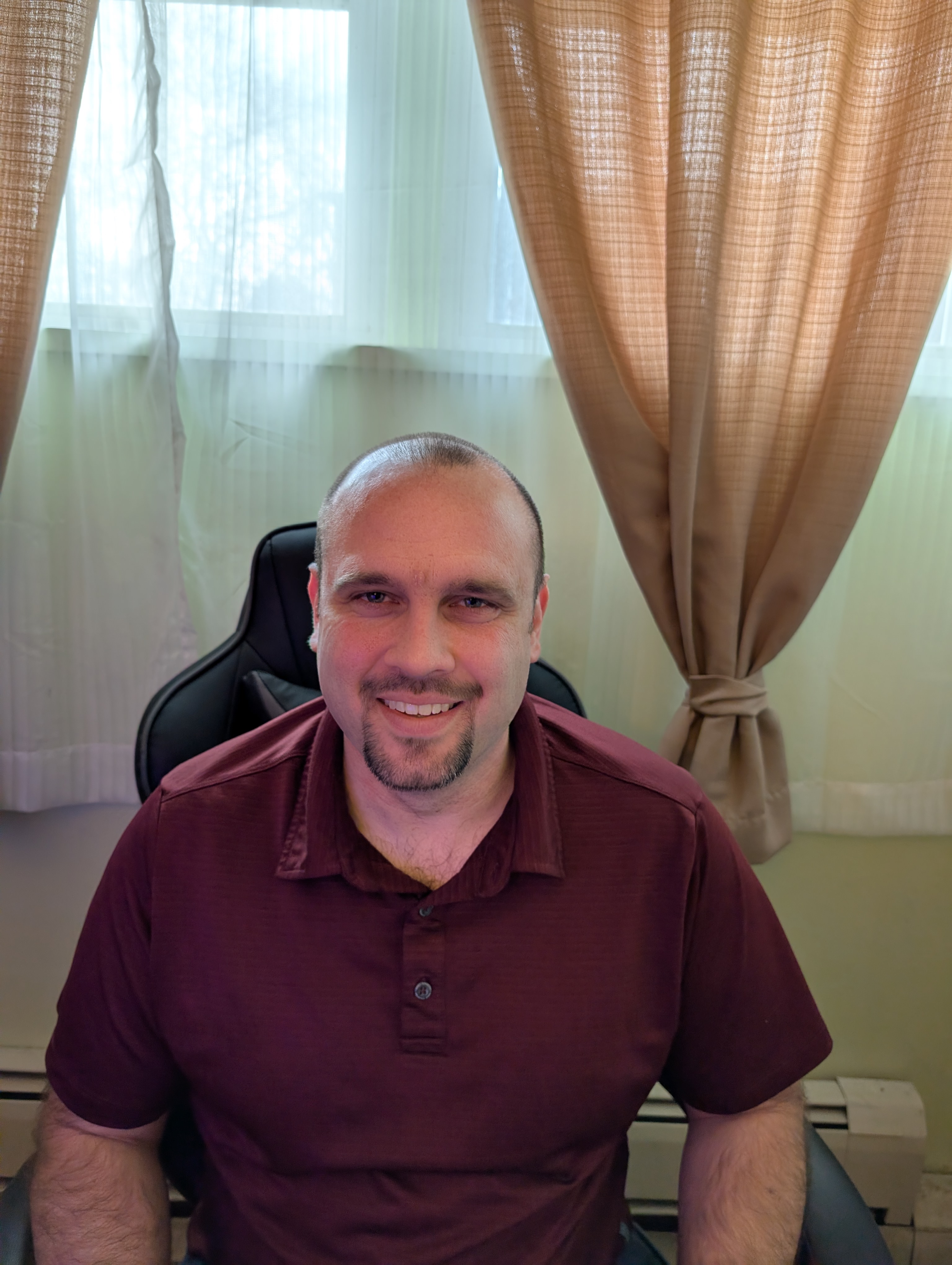
Jeremie Fish Headshot

I am a research assistant professor working complex systems, which is a field that studies the complex interactions between systems and how that shapes overall system behavior, sometimes in surprising ways. Examples of real world complex systems include the brain, supply chain networks, protein-protein interaction networks (the interactome). My work combines rigorous mathematics, data-driven modeling, and algorithm design to understand, predict, and control complex systems in the real world.

Explore my research

About

I am currently a Research Assistant Professor in the Department of Electrical and Computer Engineering at Clarkson University in Potsdam, New York. My background includes a Ph.D. and M.S. in Physics from Clarkson University, and a B.A. in Physics from SUNY Plattsburgh.

First and foremost, I am a dedicated husband and father of 2 children, Ben and Jordyn. I enjoy teaching and guiding undergraduate/graduate/postdoctoral research projects.

Beyond research, I am deeply engaged in teaching and mentoring as well as public outreach, for example I am currently the director of Clarkson's Science Café . I have also assumed the role of the assistant director for the Clarkson Center for Complex Systems Science. In my limited free time, I enjoy playing soccer and basketball, and watching sports (primarily Clarkson hockey of course!)

Current Group Members

Dr. Kevin Slote

Postdoctoral Researcher

Fernando Quevedo

Graduate Researcher

Sivannah Aalfs

Undergraduate Researcher

Research

My research focuses on the statistical structure and dynamics of complex systems, with an emphasis on time series, and network modeling. I work at the intersection of physics, statistics, and machine learning, often using information-theoretic tools to extract structure from noisy, high-dimensional data. I also have a deep interest in criticality in networked systems, working to understand when either the network or the dynamics on it break down or transition into a new behavior.

Areas of interest

  • Statistical modeling: Probabilistic models for complex, noisy, and partially observed systems.
  • Time series & criticality/anomaly detection: Methods for identifying regime shifts, failures, and rare events in streams of data.
  • Network modeling: Inference of connectivity, dependencies, and interaction structure from multivariate observations.
  • Information-theoretic inference: Using entropy, mutual information, and related quantities to detect structure and causality.
  • Applied machine learning: Algorithm design that balances predictive performance, interpretability, and robustness.

Selected directions and projects

  • Applications of dynamical systems to real world pheonomena: Asking questions such as: what can we learn from viewing the brain as a network connected dynamical system? What critical transitions would be expected in supply chain networks?
  • System health and resilience: Developing indicators and models that track system health over time, detect early warning signals, and guide intervention.
  • Data-driven models for complex networks: Learning network structure and dynamics from empirical data.
  • Algorithmic frameworks for real-world constraints: Bridging theory and practice by integrating domain knowledge, limited data, and deployment constraints.

Publications and preprints

A full publication list (potentially out of date) can be found below.

Publications

Teaching

My teaching spans core physics, mathematical methods, and engineering courses. I aim to connect rigorous theory with intuition, visualization, and real-world applications, helping students build both conceptual understanding and technical fluency. I am also currently developing a series of linked webpages to allow my students and research students to "drill down" if there are important topics that they have either not learned or have forgotten throughout the course of their academic career to make it easier for them to progress through their learning. As an example, when discussing separable ordinary differential equations, it will be good for students to remember how to integrate various problems, and thus a link to relevant integration techniques is provided. The landing page for this course is Courses;

Teaching philosophy

  • Conceptual clarity: Emphasizing deep understanding of underlying principles, not just procedural skill.
  • Multiple representations: Integrating equations, diagrams, simulations, and physical intuition to reinforce ideas.
  • Problem-solving as a craft: Guiding students through the full problem-solving process: modeling, approximation, computation, and interpretation.
  • Bridging theory and practice: Highlighting connections to data analysis, modeling, and modern computational tools.

Courses and roles

  • Research Assistant Professor, Clarkson University: Supervision and mentoring of students in research projects on statistical modeling and complex systems.
  • Postdoctoral / Research Associate roles: Mentoring students and collaborators on time series analysis, anomaly detection, and algorithm development.
  • Adjunct instruction and outreach: Experience translating technical concepts to diverse audiences, including non-specialists.

Courses Taught: Clarkson Univeristy ES 340 Engineering Thermodynamics - Fall 2024, Spring 2025, Fall 2025.
Clarkson University ES 324 Dynamical Systems - Spring 2024
St. Lawrence University MATH 135 Calculus I - Fall 2022, Spring 2023
Paul Smith's College MAT 125 Intermediate Algebra - Fall 2021
Norwood School - SAT Preparation Course (Math portion) - Spring 2019
Clarkson University (while grad student but as listed instructor) MA 120 Introduction to STEM Mathematics - Fall 2016, Spring 2017

Grant funding

I have served as Principal Investigator on competitive, externally funded projects spanning defense, basic research, and scientific travel support. Below is a summary of selected awards.

DARPA – RSDN Program

Role: Principal Investigator

Agency / Program: Defense Advanced Research Projects Agency (DARPA), Resilient Supply and Demand Networks (RSDN) program phase 3.

Institution: Clarkson University

Project description: This project develops modeling and inference frameworks for robust, adaptive networked systems, with emphasis on system health, anomaly detection, and resilient operation in adversarial or uncertain environments.

Dates: [2026] – [2027]

Funding level: [$225k]

Army Research Office (ARO) – Reduced Models, Control and Fragility in Complex Systems by an Informatics Perspective

Role: Principal Investigator

Agency: U.S. Army Research Office (ARO)

Institution: Clarkson University

Project description: This project focuses on criticality in complex systems. Identifying fragility over networked dynamical systems, through Shannon information theoretic measures.

Dates: [2023] – [2026]

Funding level: [$479k]

Award number: [W911NF2310393]

National Science Foundation – Travel Grant

Role: Principal Investigator, with Chunlei Liang, Erik Bollt and Golshan Madraki as Co-PI's

Agency: National Science Foundation (NSF)

Project description: Travel support for multiple researchers to present research results and build collaborations in areas of statistical physics, complex systems, and data-driven modeling.

Dates: [2024]

Funding level: [$13k]

Program / Division: [Division of Civil, Mechanical and Manufacturing Innovation]

Award number: [2406593]

Outreach

I have previously served a number of roles in the regional science-olympiad competition, both as an assistant coach (to the Lake Placid high school team under coach Frank Brunner) and as a competition judge.

Contact

For collaboration, mentoring inquiries, or questions about my work, please feel free to reach out.

  • Email: jafish@clarkson.edu
  • Institutional affiliation: Department of Electrical and Computer Engineering, Clarkson University, Potsdam, NY
  • Assistant Director: Clarkson Center for Complex Systems Science (C3S2), Clarkson University, Potsdam, NY
  • GitHub: Github
  • LinkedIn:LinkedIn;a

© Jeremie Fish. All rights reserved.